Comprehensive Guide for Selection and Application of Buffer Rollers
Optimizing conveyor performance and longevity through proper buffer roller selection
1. Key Application Scenarios and Buffering Requirements for Conveyors
Conveyors are widely used in modern industrial scenarios. Under the original layout, details have been optimized based on the following practical application scenarios:
1.1 High Impact Loading Area (Optimized Belt and Drum)
- At the feeding point (discharge port) of the conveyor, use high elasticity and wear-resistant belts to minimize friction and prevent belt wear and heating;
- The elastic belt at the transfer point below the crusher and screening machine can effectively reduce the impact force of material discharge;
- High drop unloading area (drop>2m), control the unloading speed, and the elastic belt can reduce the impact force of unloading.
1.2 Special Material Handling Conditions (High Impact and High Quality + Irregular Shape)
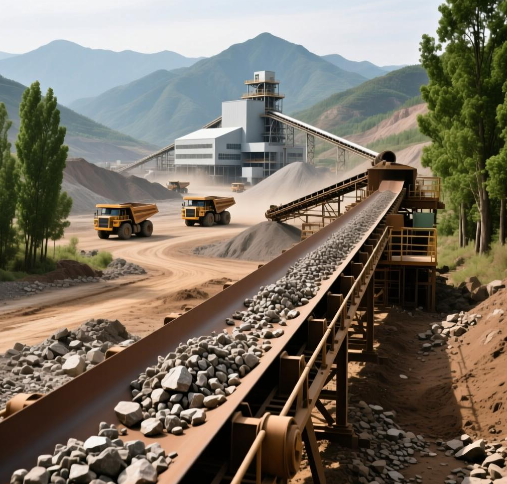
Typical Materials: Large ore/rock transportation (particle size>300mm); Sharp materials (metal waste, crushed stones); Heavy materials (iron ore, steel slag).
The transportation of the above materials can easily cause the following problems:
- The unstable center of gravity of the conveyor can easily cause conveyor malfunctions;
- Easy to cause belt wear on the conveyor;
- The discharge port is prone to damaging the loading tool;
- Conveyors are susceptible to significant impact forces when receiving materials.
1.3 Application in Harsh Environments
Typical Scenarios: Port loading and unloading systems (high throughput); Main transportation line of the mine (continuous operation); High temperature material area in steel metallurgy.
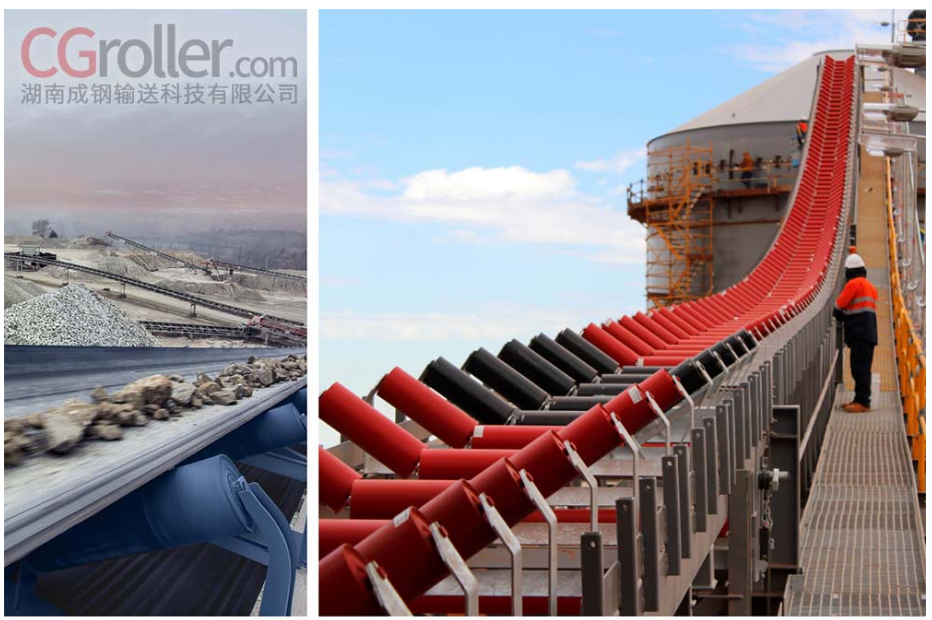
The limitations of loading, unloading, and maintenance of conveyors make maintenance difficult in these application scenarios, requiring strict assurance of the quality and maintenance time of the conveyor. This places high demands on the main components, such as conveyor rollers (buffer rollers, groove type bearing rollers, self-aligning friction rollers, etc.)
Roller and Component Composition of Chenggang Conveyor Technology Co., Ltd
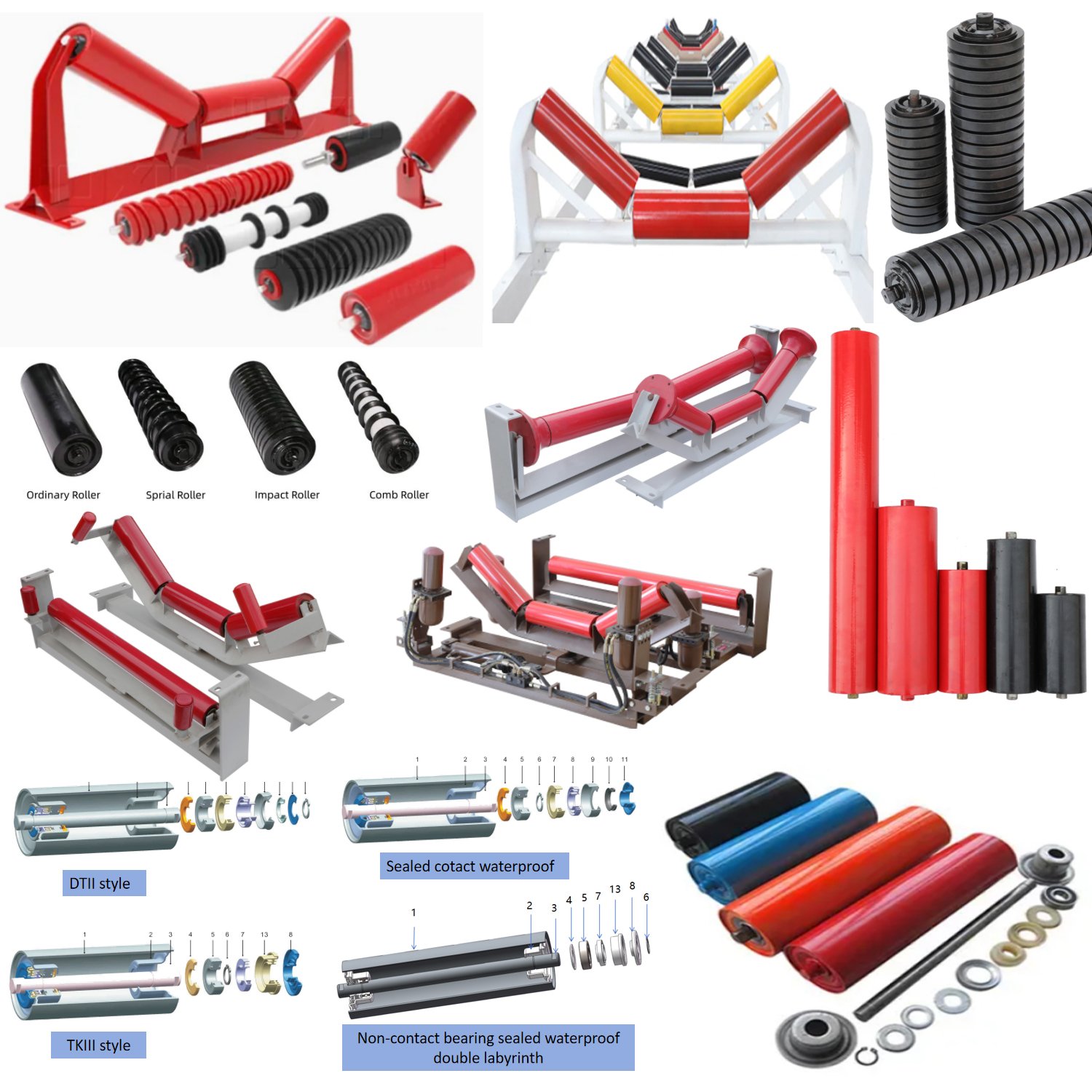
- Roller shell: Made of 6-10mm thick high-strength steel pipe or wear-resistant polymer material;
- Bearing components: Heavy-duty deep groove ball bearings equipped with multi-layer labyrinth seals;
- Spindle: Made of high-strength alloy steel, with surface anti-corrosion treatment;
- Sealing system: Multiple protection design, effectively blocking the intrusion of dust and moisture.
2. Main Classification and Technical Characteristics of Buffer Rollers
The composition and classification of buffer rollers are as follows. Different compositions and classifications have different application scenarios.
2.1 Comparison of Structural Classification
| Type | Buffering Principle | Suitable Drop Height | Key Characteristics |
|---|---|---|---|
| Rubber Ring Type | Elastic Deformation | 1-3m | Economical and practical, easy to replace |
| Spring Plate Type | Spring Damping | 2-6m | Large buffering area, anti-scattering material |
| Articulated Series | Multi-degree of Freedom | 3-8m | Strong adaptability, easy cleaning |
| Polyurethane Encapsulated | Material Elasticity | 2-5m | Wear-resistant and corrosion-resistant, excellent comprehensive performance |
2.2 Classification of Groove Types
- 35° Groove Type Buffer Group - Universal bulk material;
- Buffer Flat Roller - Bagged/packaged materials;
- V-shaped Buffer Roller - Anti-deviation design.
3. Five Step Method for Selecting the Best Buffer Roller
Buffer rollers are selected according to different needs. The following is the best method for selecting buffer rollers based on years of experience:
1Step 1: List of Operating Condition Analysis
Choose based on your company's actual application scenarios:
- Material characteristics: Particle size, density, humidity, abrasion resistance;
- Impact parameters: Drop height, belt speed, instantaneous flow rate;
- Environmental factors: Temperature, corrosiveness, explosion-proof requirements.
2Step 2: Technical Parameter Matching
- Calculation formula: Buffer energy demand;
- Selection principle: Rated buffering capacity ≥ calculated value × safety factor 1.5.
3Step 3: Structural Selection Decision Tree
- Large material particle size → Spring plate/hinged type;
- Strong environmental corrosion → Polyurethane coating/stainless steel;
- High maintenance convenience requirements → Modular rubber ring type;
- Prioritize anti-scattering materials → Spring plate/sealing design.
4Step 4: Verification of Key Quality Indicators
Key parameters reference:
- Axis: Cold drawn steel S235JRG2 (EN10027-2); ST37 (DIN17100); E24 (AFNOR NFA35501);
- Bearing: Deep groove ball bearing (clearance grade C3) DIN6263 series;
- Seals: Multi-layer labyrinth seal + external V-ring;
- Dynamic balance: Operating vibration <2.5mm/s;
- Life standard: Normal working conditions >30000 hours.
5Step 5: Economic Evaluation
- Initial investment vs maintenance cost;
- Calculation of conveyor belt protection benefits;
- Avoidance value of downtime losses.
4. Core Points of Installation and Maintenance
Installation Specifications
- Distance from the feeding point: 1-1.5 times the bandwidth;
- Transition zone setting: 3-5 sets of transition rollers at the front and back respectively;
- Installation angle error: <0.5°.
Maintenance Cycle
- Daily inspection: Abnormal bearing noise, rubber wear;
- Regular maintenance: 6-month lubrication inspection;
- Preventive replacement: Rubber parts have a 3-5 year replacement cycle.
5. Recommended Configurations for Industry Applications
Heavy Load Working Conditions in Mines
- Preferred: Heavy duty spring plate buffer bed;
- Configuration: 45° groove angle, ceramic coating;
- Spacing: 50% -70% of the normal spacing.
Port Loading and Unloading System
- Preferred: Articulated buffer group;
- Configuration: Anti-corrosion coating, self-cleaning design;
- Monitoring: Integrated impact force sensor.
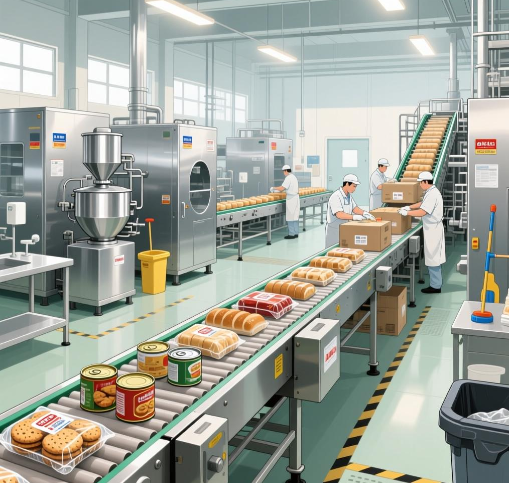
Food Light Industry
- Preferred: Stainless steel polyurethane roller;
- Configuration: Food grade materials, hygienic design;
- Certification: FDA/HACCP Compliance.
6. Common Selection Misconceptions to Avoid
- Overconfiguration: Use heavy-duty buffering when the drop is less than 1m;
- Ignore transition: Buffer directly connects to fixed segment;
- Material mismatch: Ordinary carbon steel is used in acidic environments;
- Excessive spacing: Beyond the bearing capacity range.